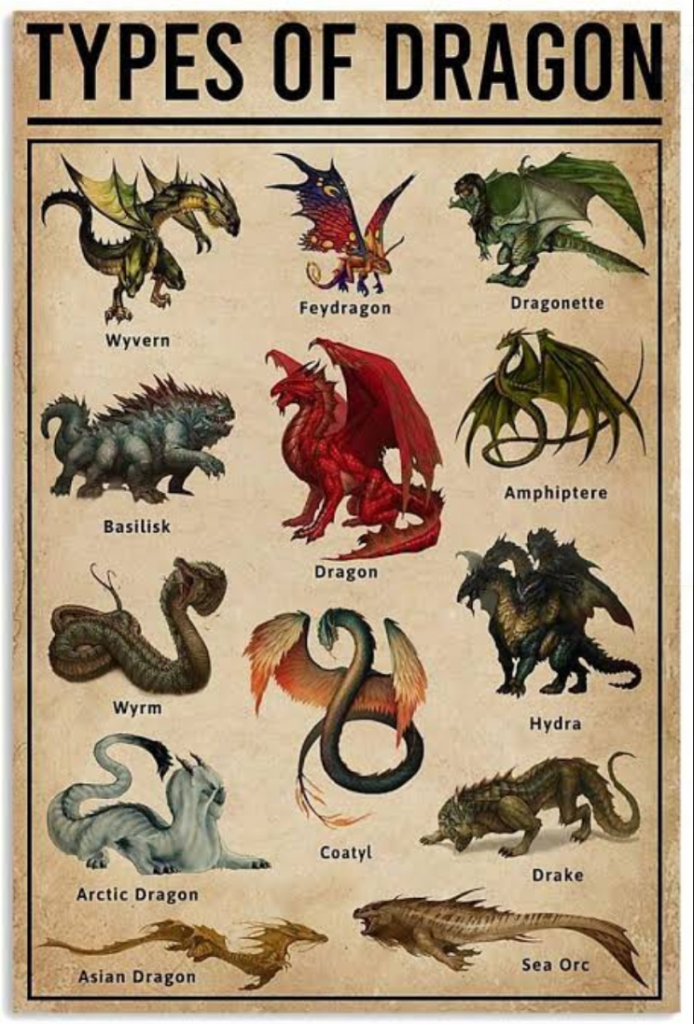
“Dragon” is used by our organization as an umbrella term for flying reptilian creatures regardless of the magic they possess. Some dragons use magic for their breath attacks, some have other abilities outside of them, and some have none at all. Below are some of the most common dragons seen in popular media, but if a dragon you see does not fit any below, please do not interact with it and contact a local conservationalist.
Wyverns
Wyverns are very popular in media for their slim bodies and winged front legs. They often breathe fire and can be more aggressive than true dragons due to their limited intelligence. Some myths say that they are actually chimerical with bird wings and a serpent for a tail.
They are notorious for stealing livestock and are mostly migratory, solitary predators. They do not typically claim an area, and if they do, they move on quickly.
For generations, depictions of wyverns have been used on family crests and other symbolic pieces as displays of power.
Friendliness: None
Breath Attack: Fire, Typically
Intelligence: Sentient, Typically
“True” Dragons
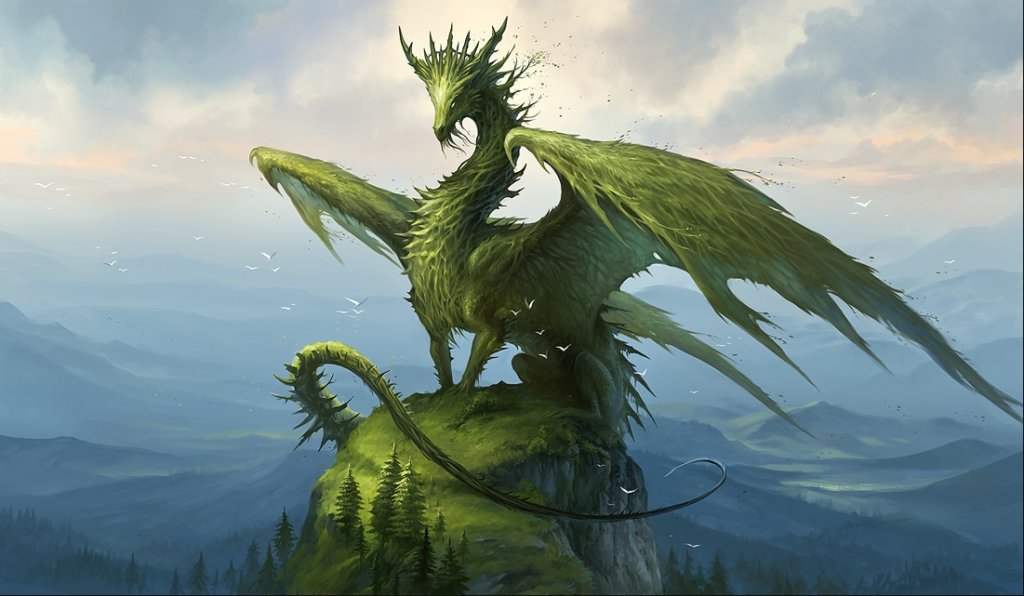
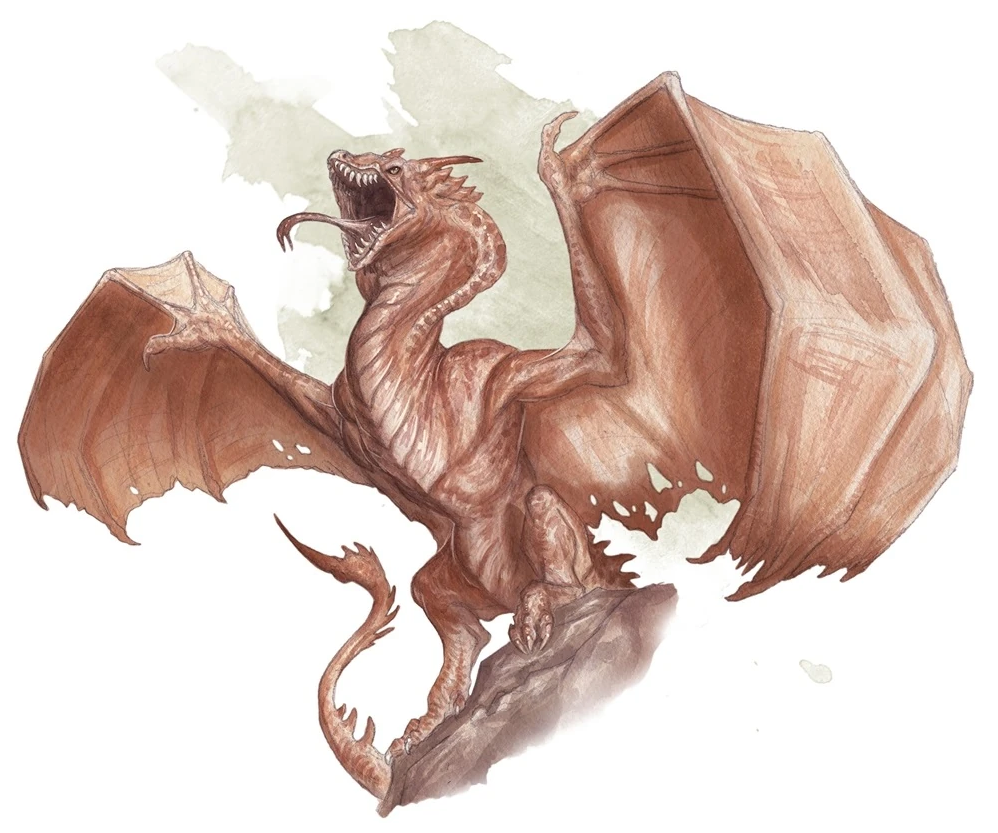
True dragons are very proud and intelligent creatures. Their wings sit proudly on their backs, and they have four massive legs. They often establish territories and nest in large trees or caves at the highest peaks of mountains. In their dens, they like to collect, or horde, items ranging from glittering gemstones and gold to tomes of magical power. Hordes do not always have a physical presence. There have been few instances where true dragons have horded music, leading to the kidnapping of many local bards.
Some members of royalty agree to lease land from true dragons for protection, while others seek their wisdom from living hundreds, sometimes thousands, of years.